
Most supplier losses come from three quiet behaviours: prices creeping up 3–8% across successive invoices without announcement, delivering short against the invoice (5kg billed, 4kg delivered), and quality slipping to a cheaper grade while the price holds. The defence is systematic: keep your own price book per supplier, weigh every delivery, hold two suppliers per category so neither can squeeze you, and renegotiate quarterly with a competitor's quote in hand. Suppliers who know you measure never stop being fair.</p>
Price creep is the biggest. Oil at $16.50/case becomes $17.00, then $17.40, then $17.90 — each jump small enough to miss on a busy receiving day, adding up to 8–10% a year. Nobody announces it; it only exists in the invoices, and almost nobody reads them side by side.
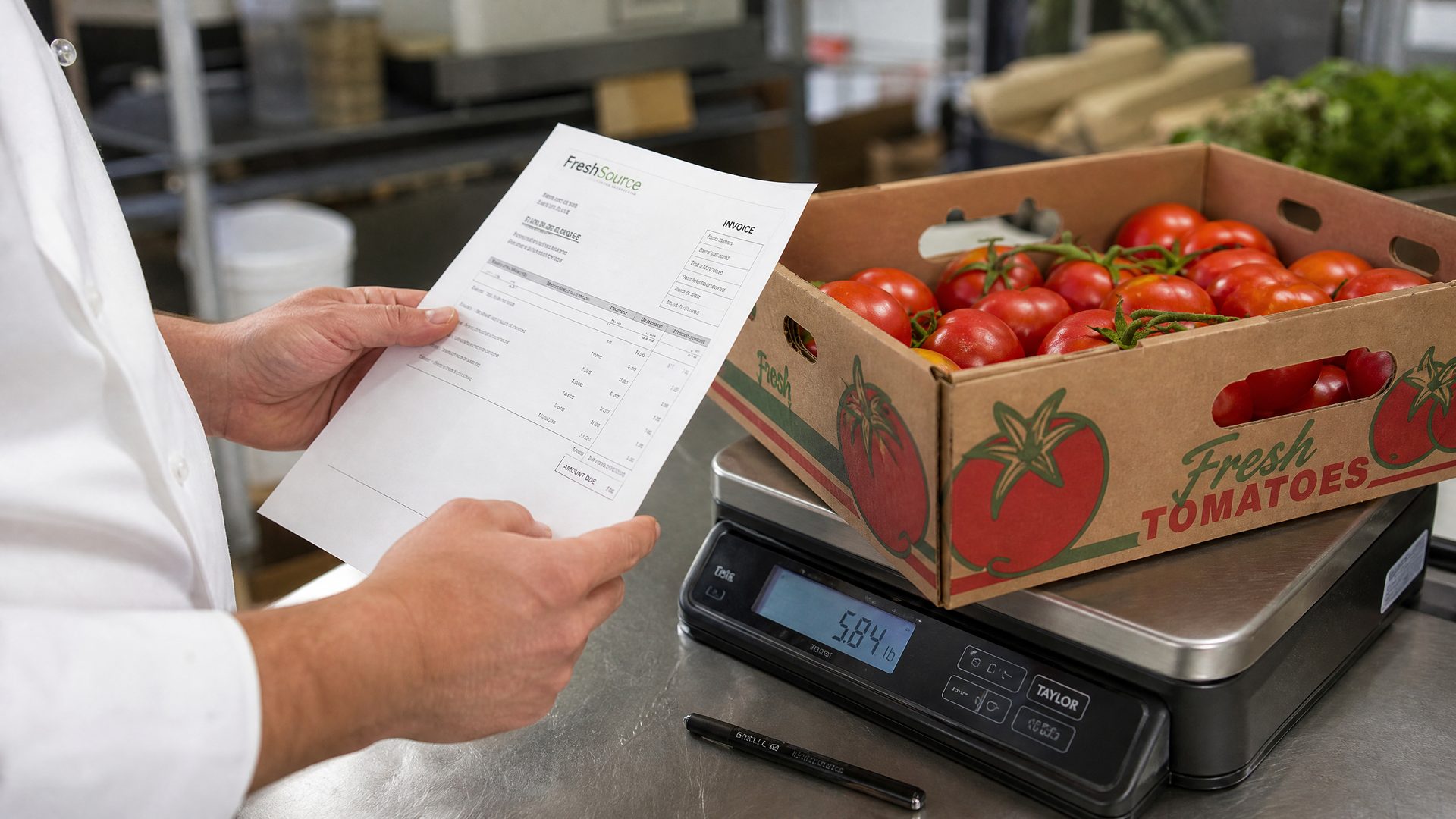
Short deliveries exploit receiving chaos: the invoice says 5 cases of tomatoes, the truck 'was short', and the receiver signs anyway. In markets with cash payments and daily deliveries, this is a chronic leak.
Quality drift costs without appearing to: the same price buys smaller eggs, leaner meat cuts, older produce. Per-plate costs rise even though the invoice looks identical.
Negotiation starts with knowledge. Keep one record — a notebook, a sheet, or RestoIQ's supplier prices — of what you actually paid, per item, per supplier, per week. Within a month you know every product's true market price in your town. From that point, a supplier who quotes above your recorded price gets a simple question: 'Last week it was X. What changed?' That question, asked twice, changes supplier behaviour permanently.
The receiving ritual: check the invoice against your recorded prices before signing; weigh or count every item against the invoice; photograph short or damaged goods and message the supplier immediately; and never let the delivery driver wait you into signing. Ten minutes at the back door prevents more loss than a year of worry.
RestoIQ makes the price book automatic — your negotiated prices live in the system, so an invoice above the agreed price is flagged the moment it is entered, and your purchasing history across suppliers becomes a one-screen comparison instead of a filing cabinet.
A Lagos restaurant was paying ₦1,250,000/month for core dry goods across one supplier. The price book showed rice creeping 4% and oil 6% over six months. The owner took two competitor quotes into a meeting; the incumbent matched both, froze prices for three months, and threw in free delivery. Total saving that quarter: roughly ₦340,000 — found entirely in invoices that had been arriving quietly, every week, for half a year.
Mostly through price creep: 3–8% increases spread across successive invoices, each small enough to miss. The defence is a price book recording what you actually paid per item, per supplier, per week.
Yes — two suppliers per category is the standard defence. It gives you a negotiating alternative and removes any single supplier's power to squeeze your prices.
Invoice prices against your recorded prices, weight and count of every item against the invoice, and quality against what you normally receive. Photograph any short or damaged goods before signing.