
Recipe costing means breaking every menu dish into its exact ingredients, converting each to its purchase-unit price (per kg, per litre, per egg), multiplying by the quantity used, and adding the results to get the true plate cost. Dividing plate cost by selling price gives the dish's food cost percentage; a healthy menu keeps most dishes at 25–32%. Without this, you are pricing by guessing and hoping — and in a business with 5–10% margins, guessing is how restaurants quietly die.
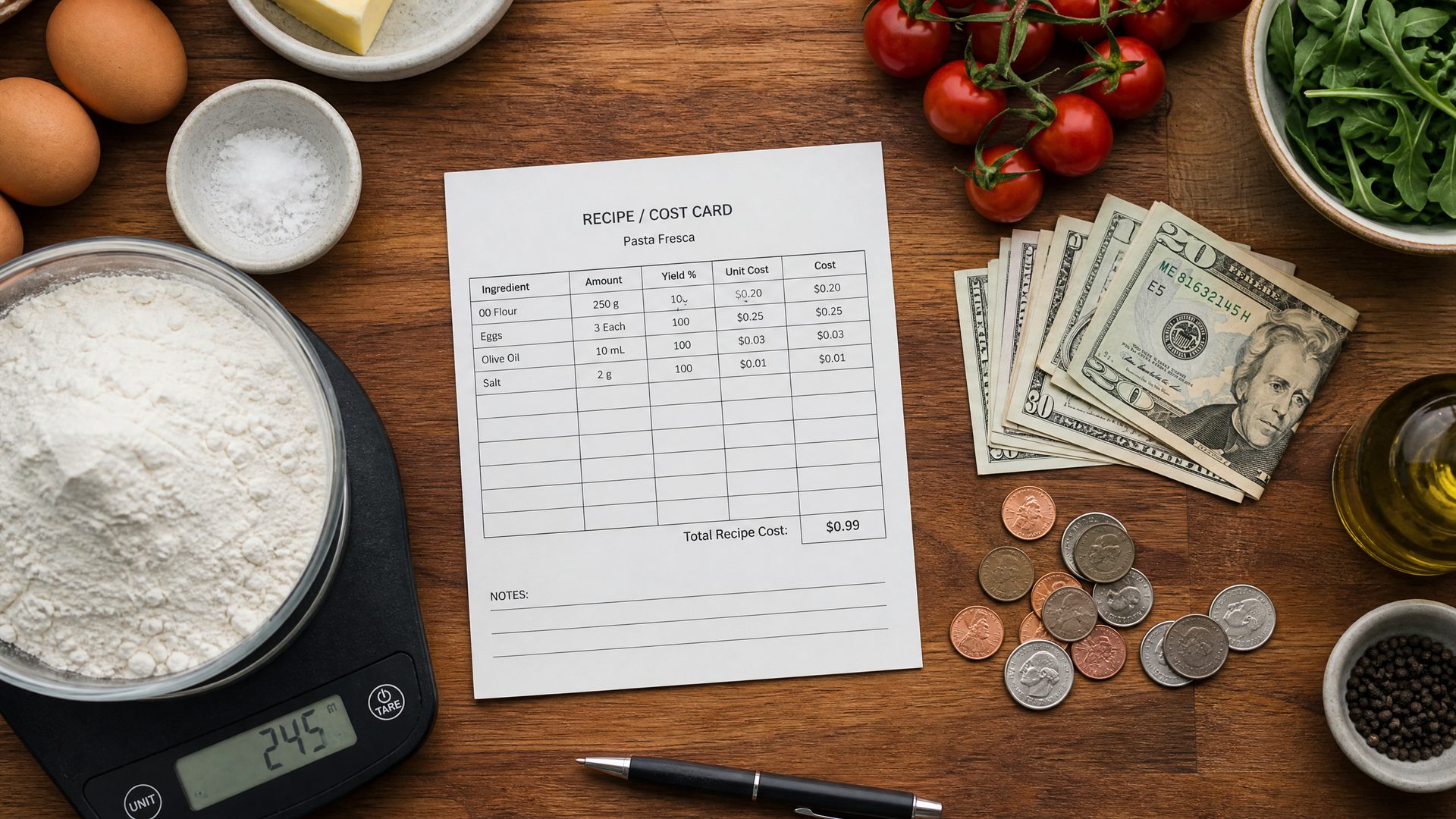
Worked example — a grilled chicken plate: 250g chicken ($0.88), 60mL oil ($0.22), spices and marinade ($0.15), rice 150g ($0.12), vegetables ($0.30), packaging ($0.18) → plate cost $1.85. Priced at $6.50, food cost is 28.5% — healthy.
1. Old prices. Costing with last year's supplier prices makes everything look better than it is. Recost monthly or whenever a major supplier raises prices.
2. Forgotten ingredients. Oil, salt, garnish, and packaging are routinely omitted — they can add 10–15% to plate cost.
3. Wrong units. Buying by the case, cooking by the gram: conversion errors quietly double your estimate.
4. Ignoring yield. A kg of raw chicken becomes ~700g usable after trimming. Cost the usable gram, not the purchased kilo — or your chicken dishes are underpriced by ~30%.
5. One cost for every location. Multi-location restaurants with different suppliers per branch have different real costs; averaging them hides the branch that is actually losing money.
Once you know plate cost, pricing is arithmetic with a target: price = plate cost ÷ target food cost %. A $1.85 plate at a 30% target prices at $6.17 — round to $6.50, watch competitor prices, and confirm the market accepts it. Dishes that cannot reach the target get rebuilt (different ingredients, smaller portion, new supplier) or removed. This is the engine of menu engineering: costed recipes feed the quadrant analysis that decides what stays, what changes, and what goes.
A 40-dish menu takes a careful owner a full weekend the first time. RestoIQ stores recipes once — ingredients, quantities, units, and live supplier prices — so plate costs update themselves whenever a purchase order records a new price. Multi-location operators see cost per branch, and the variance engine compares what the recipes say each plate should consume against what the weekly counts say actually left the store. The recipe costing that used to be a weekend project becomes a living system.
List every ingredient, convert each to its unit cost (price ÷ package size), multiply by the quantity used, and sum the lines. Divide by the selling price for food cost percentage.
Most dishes should land between 25–32%. Dishes above that either need repricing, a smaller portion, different ingredients, or removal from the menu.
Small lines add up: oil, salt, garnish, and packaging typically add 10–15% to plate cost. Omitting them makes every dish look 10–15% more profitable than it actually is.