
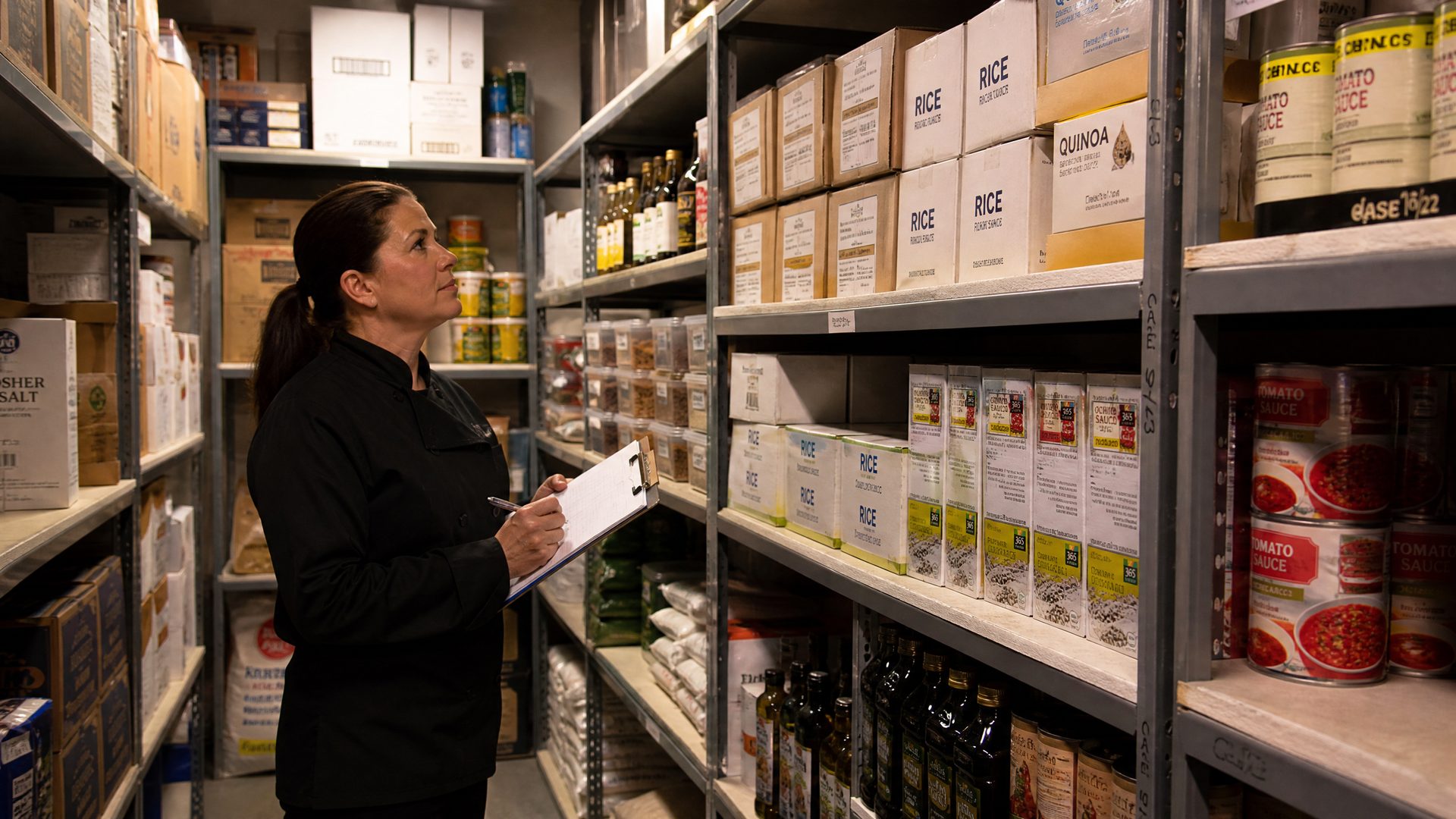
A restaurant inventory count is a full physical tally of everything you have on hand, done weekly on the same day and same time, category by category (dry goods → refrigerated → frozen → bar), counting from one end of each shelf to the other so nothing is counted twice. It takes 60–90 minutes for a mid-size restaurant with two people, and it is the foundation every other control — food cost, theft detection, par levels — is built on. Without weekly counts, you do not know your numbers at all.
Monthly counts are too slow to catch problems while they are still small. A stolen case of oil or a supplier's creeping prices become visible within one week, not thirty days. Weekly counts also keep the kitchen honest in a way monthly ones cannot — the rhythm itself changes behaviour. And if your connectivity is unreliable, weekly counts done on a phone that works offline (like RestoIQ's) sync when the signal returns.
Always count in the same direction and same order: dry goods → refrigerated → frozen → bar, top shelf to bottom, left to right. Write quantities in consistent units — the same unit your recipes and purchase orders use (kg, litres, cases). For opened packages, estimate in tenths: a half case of tomatoes is 0.5; a bottle of whiskey at eye-level is 0.7. Bars do tenths-of-bottle pours for every spirit — this is what makes pour-cost math possible.
Each weekly count gives you four things at once:
On paper this is a heavy weekly arithmetic session. In RestoIQ the counts enter from the phone, and usage, food cost, variance, and par alerts calculate themselves — the owner reads the dashboard instead of the arithmetic.
| Step | Detail |
|---|---|
| Same day, same time | Weekly, ideally Sunday close |
| Tidy store | One item, one place |
| Consistent units | kg / litres / cases / tenths |
| Fixed order | Dry → fridge → freezer → bar |
| Two people | Counter + recorder |
| Opened packages | Tenths, honestly estimated |
| Compare vs last week | Surprises investigated same day |
| File immediately | The number only matters if it's recorded |
Almost every owner doing their first real weekly counts discovers at least one of: an item they had no idea was nearly empty, a purchase quantity far above actual need, or a variance on a high-value item that starts a conversation worth having. The counts pay for themselves within the first month — they always do.
60–90 minutes for a mid-size restaurant with two people, once weekly. Bars counting individual bottles may take slightly longer the first few times until tenths become habitual.
In tenths: a half-used case of tomatoes is 0.5, a whiskey bottle filled to eye level is 0.7. Consistency matters more than precision.
Weekly counts catch theft, spoilage, and supplier price creep while the problem is still days old instead of weeks old — and the weekly rhythm itself improves kitchen discipline.