
Hotel F&B cost control means running several outlets — breakfast buffet, all-day dining, specialty restaurant, room service, banquets — from shared stores with proper transfer accounting between kitchens. The specific hotel challenges are buffet waste (demand you cannot predict per guest), inter-outlet transfers that blur each outlet's real cost, banquet over-preparation justified as 'hospitality', and stores serving outlets that never get charged. The answer is outlet-level recipe costing, documented transfers, event-based pars for banquets, and per-outlet waste logs that make every kitchen accountable for its own number.
A hotel's central store buys for everyone, so without transfer accounting, no outlet knows its true cost — the all-day dining restaurant appears cheap because the buffet absorbed its ingredients, and the banquet appears profitable because wasted food never got charged to the event. This blurring is why hotel F&B so often 'makes revenue but no margin'. The first discipline is accounting: every transfer between kitchens documented (from, to, item, quantity), so each outlet's food cost is real, not averaged.
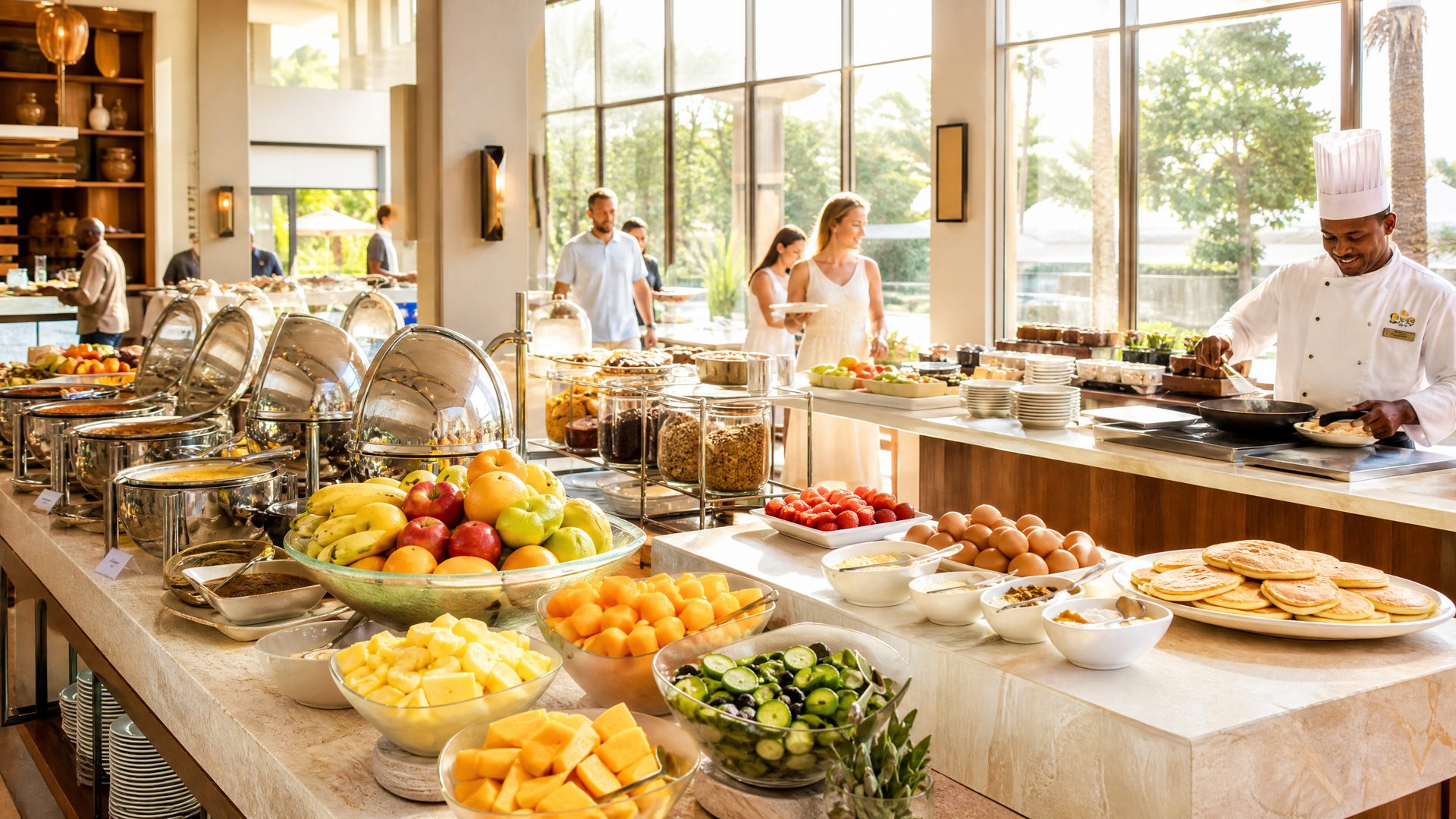
Breakfast buffets produce the hotel's most visible waste: food prepared for occupancy that guests do not eat. The control is occupancy-linked production — buffet quantities set from tonight's room count and tomorrow's check-outs, adjusted by day-of-week patterns, cooked in batches rather than all at once, and refreshed instead of topped up. Hotels that moved to batch cooking typically cut buffet waste by a third without a single guest complaint, because freshness visibly improved.
Banquets over-prepare because running short at a wedding is unthinkable — and the overage becomes waste nobody charges to the event. The professional standard is a guaranteed-count plus percentage contract (charge for the guaranteed number plus 5%), batch production with a late pre-service prep, and documented post-event waste charged as an event cost. The numbers then tell the honest story of which event types are actually profitable.
| Outlet | Target F&B cost | Typical leak |
|---|---|---|
| Breakfast buffet | 30–34% | Over-production vs occupancy |
| All-day dining | 28–32% | Uncharged transfers from stores |
| Specialty restaurant | 28–32% | Premium ingredient waste |
| Room service | 30–35% | Portion and packaging cost |
| Banquets | 28–33% | Over-prep never charged to events |
| Bar/lounge | 20–26% | Pouring and unrecorded comps |
Each outlet needs its own recipe base, waste log, and weekly count — which is why hotel groups were early adopters of multi-location inventory systems, and why RestoIQ supports multiple outlets and locations under one account with per-outlet reporting.
Hotel F&B in growth markets — East Africa's expanding hospitality sector, the Gulf's tourism boom under Vision 2030 and Expo-era demand — carries an extra burden: imported ingredient costs, currency exposure on purchased goods, and staff turnover that breaks kitchen discipline. The hotels that systematize transfers, occupancy-linked buffets, and outlet-level cost numbers outperform by clear margins, because in hospitality the competitor you are really beating is your own waste.
Shared stores and undocumented transfers blur each outlet's real cost. Without transfer accounting, some outlets appear cheap only because others absorbed their ingredient costs.
Occupancy-linked production: quantities set from room counts and check-outs, batch cooking with refreshes instead of bulk preparation, and documented waste per service.
Buffets 30–34%, all-day dining and specialty restaurants 28–32%, room service 30–35%, banquets 28–33%, bars 20–26%. Each outlet should be measured against its own target weekly.