
Accra's restaurant scene is growing fast — from upscale spots in Osu and East Legon to the choppit-and-local-food economy citywide — inside an input environment shaped by cedi volatility, imported-dependency for oil, wheat, and canned goods, and seasonal swings in tomatoes, onions, and fish. The operators protecting margins share four habits: weekly stock counts in GHS, same-day recording of all purchases including Makola-market cash buys, menu engineering that balances imported-input dishes against local-strength dishes, and monthly re-costing of the top ten sellers. A GHS 400,000/month restaurant that cuts food cost from 37% to 31% recovers <strong>GHS 24,000 monthly</strong>.</p>
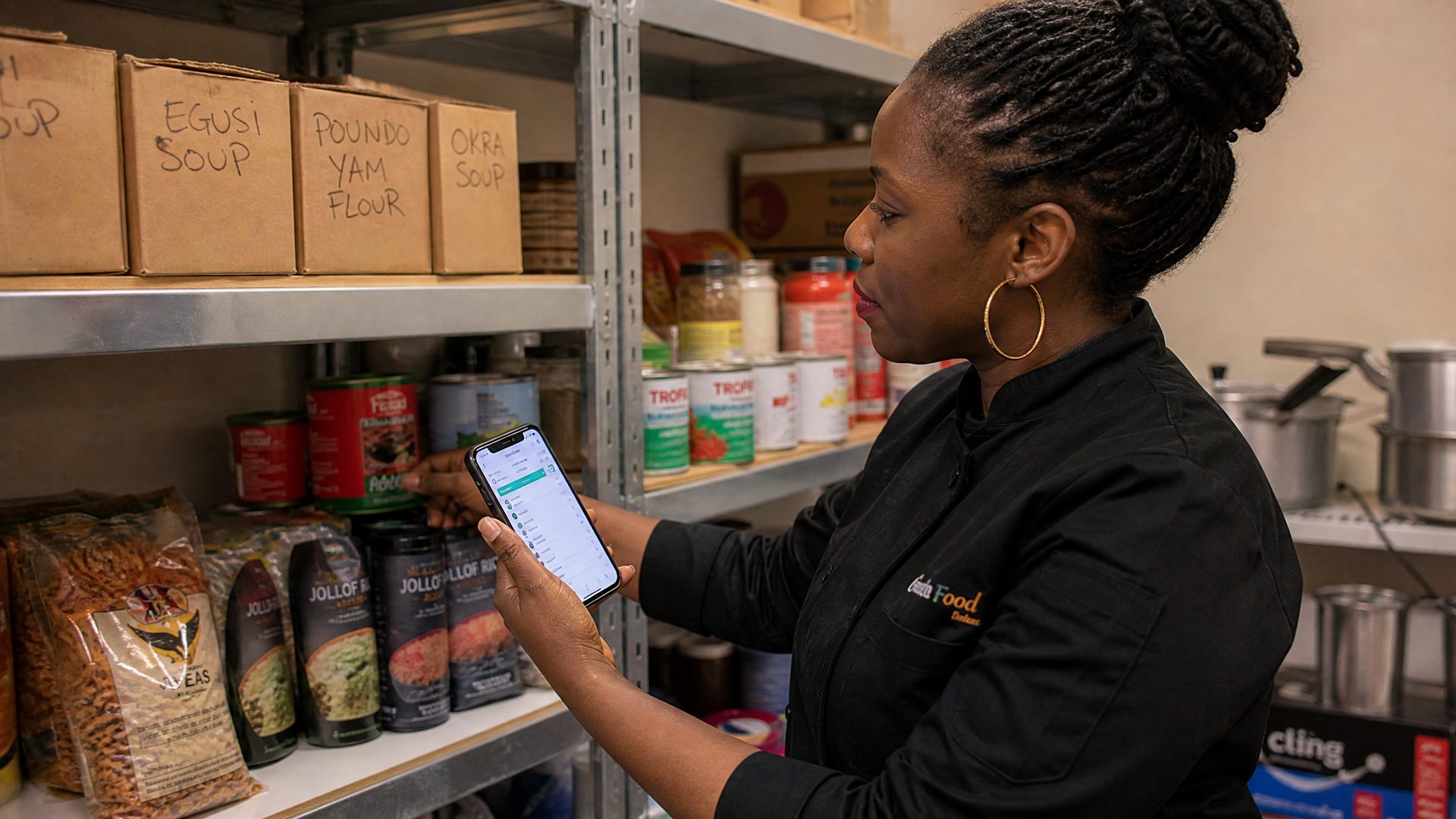
Local strengths are real and cheap: rice (local varieties), plantain, cassava, tomatoes and peppers in season, local poultry, and fresh fish from the coast. Imported dependencies are equally real: cooking oil, wheat products, canned goods, some dairy, and packaging. The menu mix between these two worlds largely determines a Ghanaian restaurant's cost stability — menus heavy on imported inputs inherit cedi risk; menus anchored in local ingredients inherit only local market risk, which is lower and slower-moving.
Seasonality hits hard on the fresh side: tomato and onion prices in Accra swing several-fold between peak and lean seasons, and smart kitchens substitute — tomato paste and alternative bases in lean months — rather than absorb.
| Item | Typical purchase cost | Notes |
|---|---|---|
| Local rice (100kg bag) | GHS 900–1,300 | Local vs imported price gap varies seasonally |
| Cooking oil (5L) | GHS 180–260 | Import parity; the classic creep line |
| Local chicken (per kg) | GHS 55–80 | Frozen imported cheaper but quality differs |
| Tomatoes (crate) | GHS 250–900 | Extreme seasonal range — substitution essential |
| Plantain (bunch) | GHS 60–150 | Seasonal but more stable than tomatoes |
| Fresh fish (per kg) | GHS 70–180 | Species and market dependent |
The tomato line again teaches menu flexibility: a crate ranging from GHS 250 to GHS 900 within a year makes any tomato-heavy dish's margin a coin flip unless the kitchen substitutes by season.
Ghana's restaurant owners are digitally native — mobile money runs the economy — and the tools they expect are phone-first, GHS-native, and priced for the market rather than imported premium. RestoIQ is built for exactly this: offline-first counting, supplier price tracking for informal cash purchasing, pars, waste logs, and a weekly food-cost dashboard. The free trial shows an Accra owner their real food cost within the first week — and in a market where most competitors never calculate it, that number is a competitive weapon.
Accra restaurant at GHS 400,000/month: food cost 37% → GHS 148,000 monthly spend. At 31%: GHS 124,000. Recovered: GHS 24,000/month — GHS 288,000 a year — from counting, price books, seasonal substitution, and re-costing.
Commonly 34–40%, above the 28–32% healthy range, due to imported-input dependency and cedi volatility. 31–34% is an achievable target with weekly controls and seasonal menu flexibility.
Substitute by season: fresh tomatoes at peak price, tomato paste and alternative bases in lean months. A crate ranging GHS 250–900 within a year makes seasonal flexibility a margin requirement, not an option.
Yes — same-day, with item, seller, and price. In Ghana's market-heavy purchasing system, the price book is often the only record that exists, and it is the only defence against undetectable price creep.